USS Constitution Gavel
Worshipful William L. Kelley presented a gavel made from original wood taken from USS Constitution, with the request that it be used only when the Master opens his lodge upon entering office and closes it upon retiring.
A legacy of friendship
More than 125 years in Wilmington
Friendship Lodge began with a small group of local Master Masons and grew into a lasting Wilmington institution. Its story is one of fellowship, sacrifice, service, and pride in a distinctive home on Church Street.
Key moments
Twenty Master Masons met on May 22, and a dispensation was granted on September 16.
Friendship Lodge was constituted on December 23, 1902.
The Hiller Tower Building was purchased, renovated, occupied, and dedicated.
The final mortgage payment was made and the mortgage was burned at the annual meeting.
A bronze memorial tablet honored the lodge's World War I servicemen.
Friendship Lodge continues its work in fellowship, charity, and community service.
Chapter one
On May 22, 1901, twenty Master Masons, all residents of Wilmington, met at Hiller’s Cranberry House on Middlesex Avenue to discuss the formation of a Masonic lodge. Worshipful Edwin L. Haley was chosen chairman, and Brother George L. Perry served as secretary.
In June, a petition was presented to the Grand Lodge. A dispensation dated September 16, 1901, was granted by the Grand Master, who appointed Worshipful Edwin L. Haley to act as Master, Brother Arthur T. Bond as Senior Warden, and Brother George C. Hill as Junior Warden.
The first election of officers by the members took place on August 20, 1902. Friendship Lodge was constituted on December 23, 1902, by Most Worshipful Grand Master Charles T. Gallagher and the officers of Grand Lodge.
William Henry Haley was the first member raised in Friendship Lodge, on December 18, 1901.
The petition to form the lodge was signed by the following Brethren:
| Worshipful Master | George Clark Hill |
|---|---|
| Senior Warden | William Lawrence Kelley |
| Junior Warden | Caleb Samuel Harriman |
| Treasurer | John Tufts Wild |
| Secretary | Winslow Hathaway |
| Chaplain | Rev. Walter Huntington Rollins |
| Marshal | John Arthur Taylor |
| Senior Deacon | Edward Nelson Eames |
| Junior Deacon | George Lewis Perry |
| Senior Steward | Almon Caleb Thompson |
| Junior Steward | Henry Melvin Taylor |
| Inside Sentinel | William Henry Putnam |
| Tyler | George Allison Hart |
Chapter two
The earliest lodge room was simple. The walls and rafters were covered with burlap, members sat on wooden settees, kerosene lamps provided light, and the room received heat only when the double doors were opened.
The altar and the Senior and Junior Wardens’ stands were built by Brothers William L. Kelley and John T. Wild. Brother Harriman contributed the burlap, Rev. Brother Rollins presented the Bible, Good Samaritan Lodge of Reading supplied the Square and Compasses, and Brother Hill gave the organ.
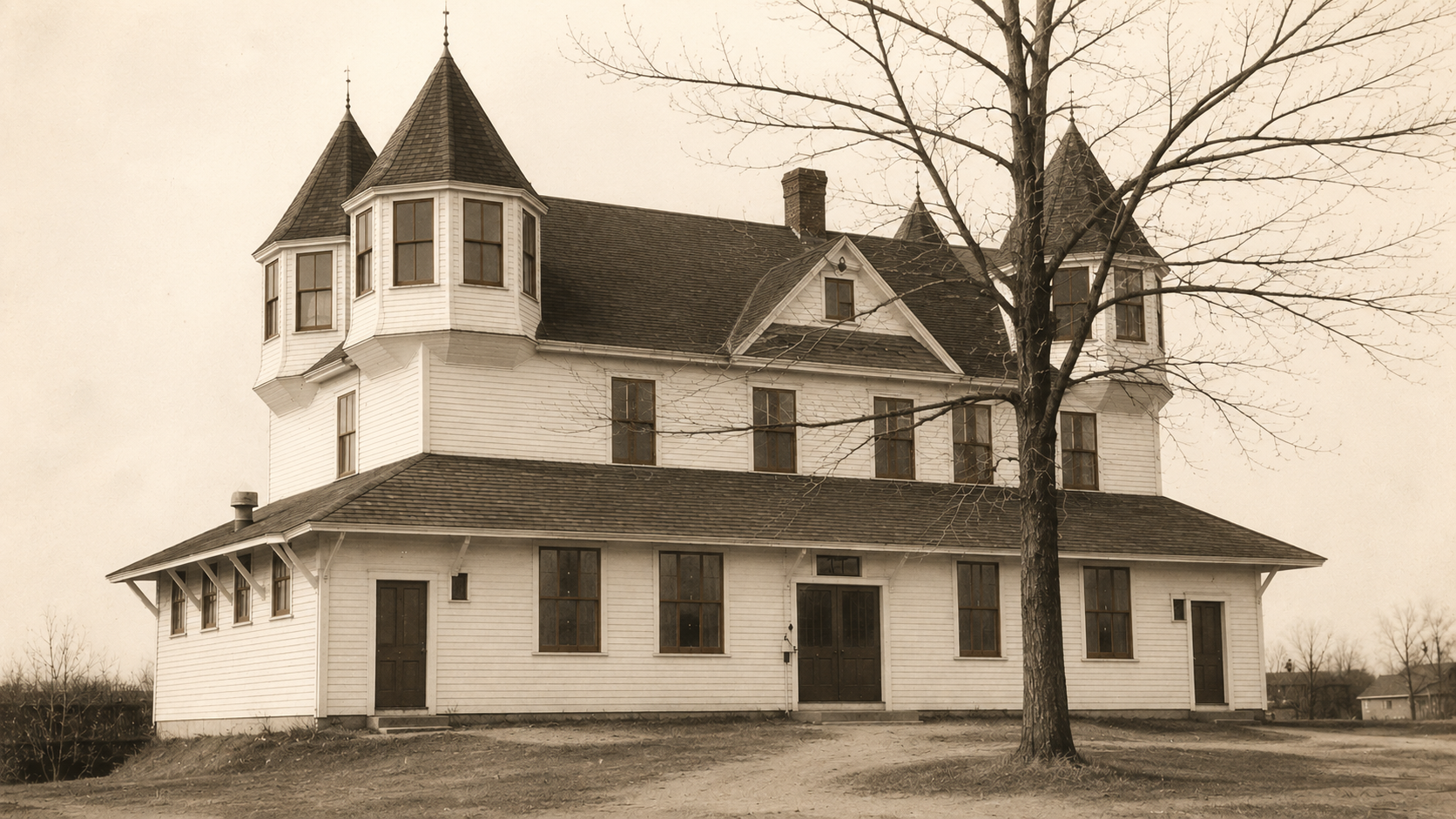
On December 31, 1904, the members voted to purchase the Hiller Tower Building, which became the lodge’s permanent home. Extensive repairs and alterations were made during 1905. The first meeting in the new home was held on January 17, 1906, and the building was dedicated by Most Worshipful Grand Master John Albert Blake and Grand Lodge officers on February 21, 1906.
Friendship Lodge began with $46 contributed by its members. To purchase the building, members subscribed $1,725 and received notes bearing 5% interest. Repairs and alterations were financed through a $3,300 mortgage.
In 1910, an additional $1,000 was borrowed on a second mortgage. That debt was paid in March 1918. The final $400 payment on the first mortgage was made in 1920, and the mortgage was burned by Right Worshipful Brother Hill at the annual meeting.
Following the mortgage burning, a banquet was held in the lower hall honoring Worshipful Brother Harriman, retiring Treasurer, and Right Worshipful Brother Hill, retiring Secretary. Dinner, gifts, addresses, singing, and music by an orchestra marked the occasion.
Traditions and improvements
Worshipful William L. Kelley presented a gavel made from original wood taken from USS Constitution, with the request that it be used only when the Master opens his lodge upon entering office and closes it upon retiring.
Electric lights replaced the kerosene lamps, an important improvement in the comfort and operation of the lodge.
The lodge purchased its present organ for $2,691, with generous support from Acacia Chapter No. 80, Order of the Eastern Star.
Town water was installed, allowing the hand pump in the kitchen to be retired.
Chapter three
Social activities in the early years included fairs, ladies’ nights, dances, and card parties. These events were successful and contributed materially to the lodge treasury.
Visits to Thomas Talbot Lodge in Billerica, Mount Horeb Lodge in Woburn, and Good Samaritan Lodge in Reading were frequent. Members often made those journeys by horse and buggy or trolley.
Service and remembrance
Friendship Lodge recorded and honored the members who served during the First and Second World Wars.
A welcome-home reception and dinner was held on December 17, 1919. Fifteen of the seventeen servicemen were able to attend.
The bronze memorial tablet bearing the names of the lodge’s World War I servicemen was dedicated on October 18, 1922, by Right Worshipful Percy W. Witherell, District Deputy Grand Master, and officers of Grand Lodge.
District leadership
Friendship Lodge has five times been honored by appointments of District Deputy Grand Masters by the Grand Lodge.
| Brother | Term |
|---|---|
| Right Worshipful George Clark Hill | 1913–1914 |
| Right Worshipful Frank W. Haynes | 1944–1945 |
| Right Worshipful Austin Clifford Woodside | 1947–1948 |
| Right Worshipful Ted Noble Morang, Sr. | 2008–2009 |
| Right Worshipful Paul Joseph McMahon, Jr. | 2022–2023 |
A continuing story
The lodge’s surroundings, furnishings, and methods have changed since 1901, but its purpose remains rooted in friendship, service, and the strengthening of good men and their community.